Cultural & heritage guide
Architecture, legends, and Kapamsay Canyon next door
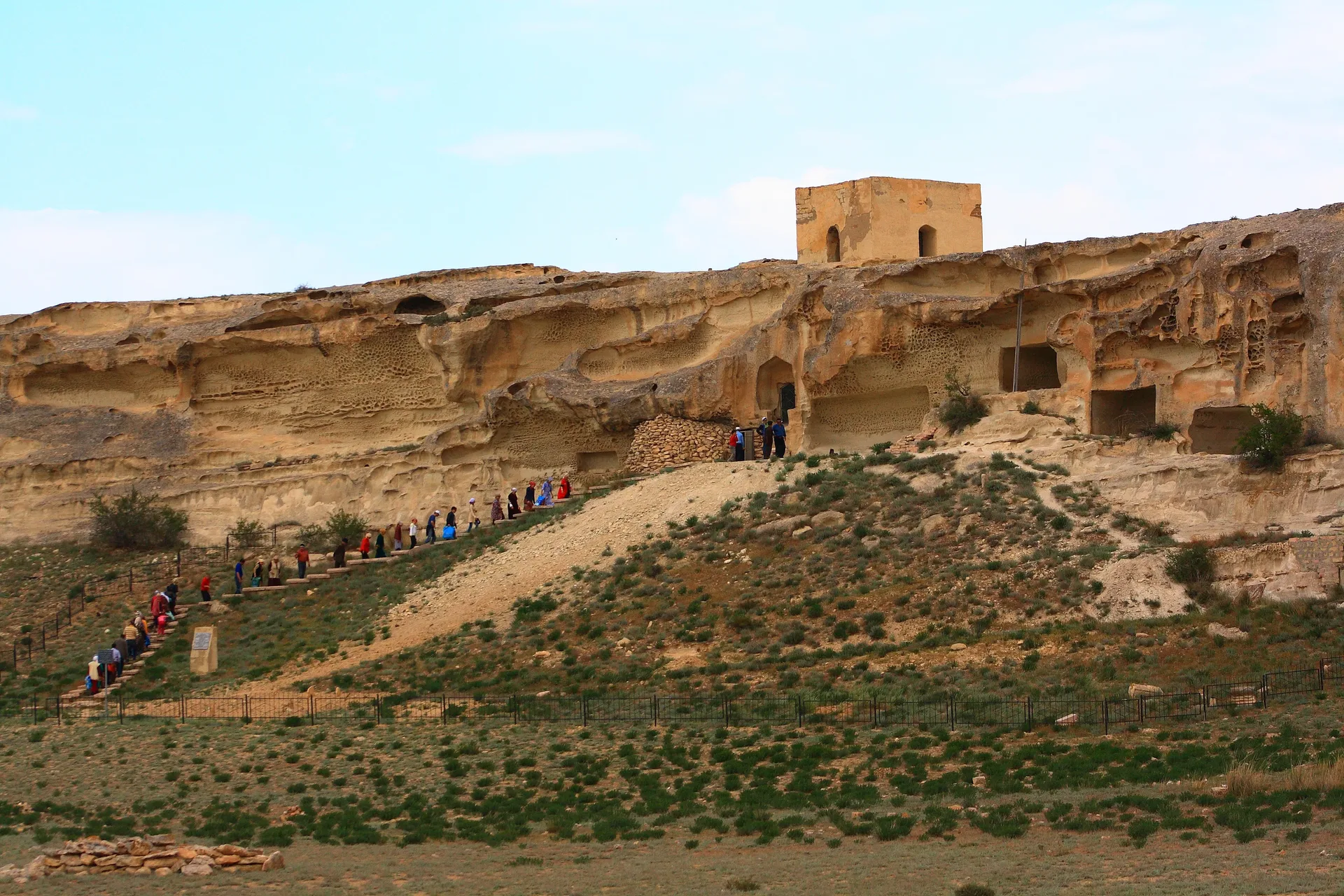
Roughly 125–130 km northwest of Aktau on Tupkaragan Peninsula, Shakpak-Ata preserves 9th–14th-century rock-cut architecture, ancient traveler inscriptions, and a hilltop necropolis before routes climb toward Kapamsay Canyon.
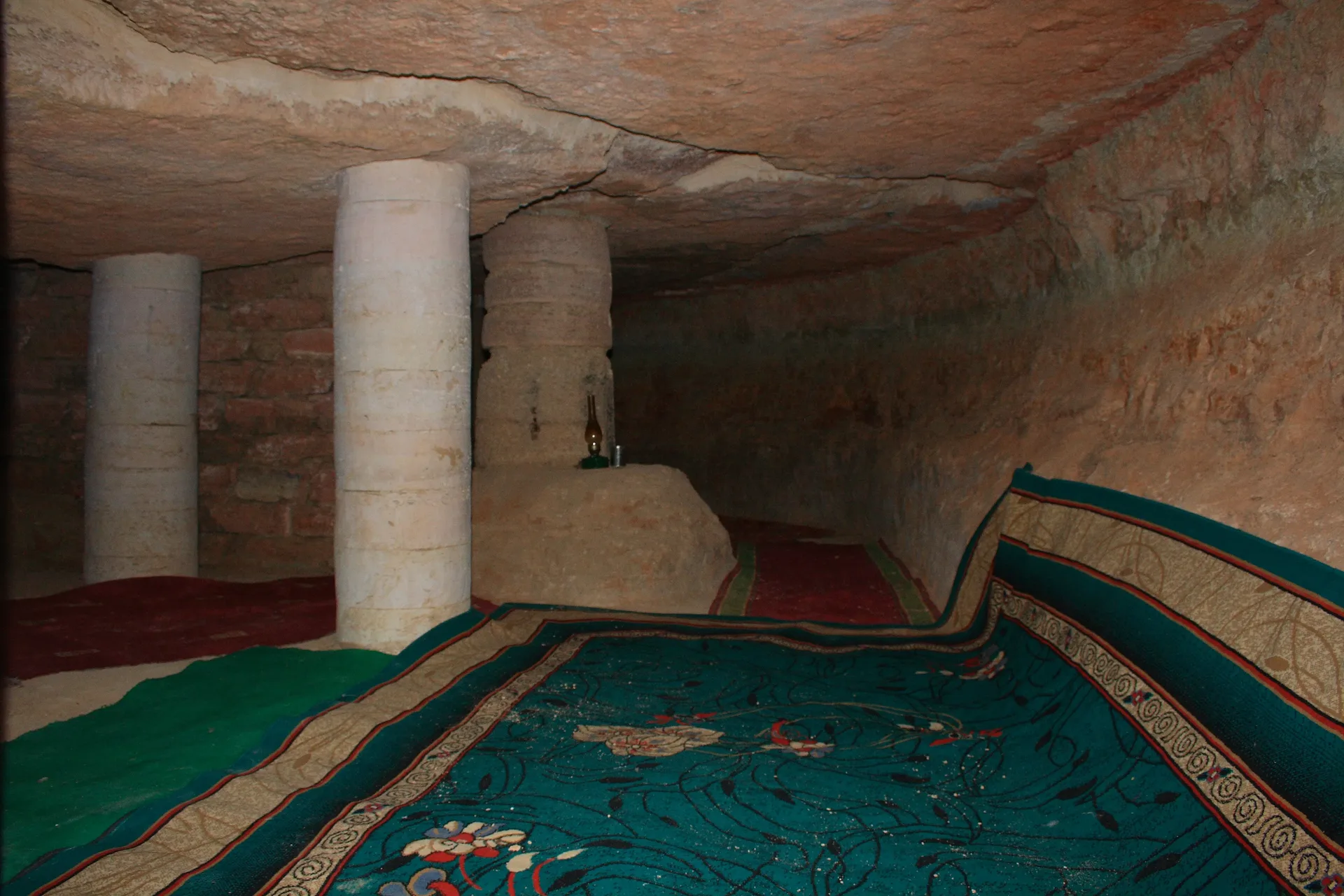
Western Kazakhstan holds dozens of subterranean Sufi sanctuaries, and Shakpak-Ata Underground Mosque—set roughly 125–130 km northwest of Aktau in the chalk foothills of the Tupkaragan Peninsula—is widely regarded as the most architecturally intricate of them all.
Scholars generally date the main Sufi excavation to the 9th–14th centuries (most prominently the 10th–13th centuries), though natural rock hollows in the chalk bluff may have served hermitages since even earlier times. Named after the folkloric Sufi mystic and defender Shakpak-Ata (“Father-Flint”)—remembered in legends as striking fire from his fingertips or blade—the sanctuary offered quiet refuge from blistering desert summers and winter steppe gales.
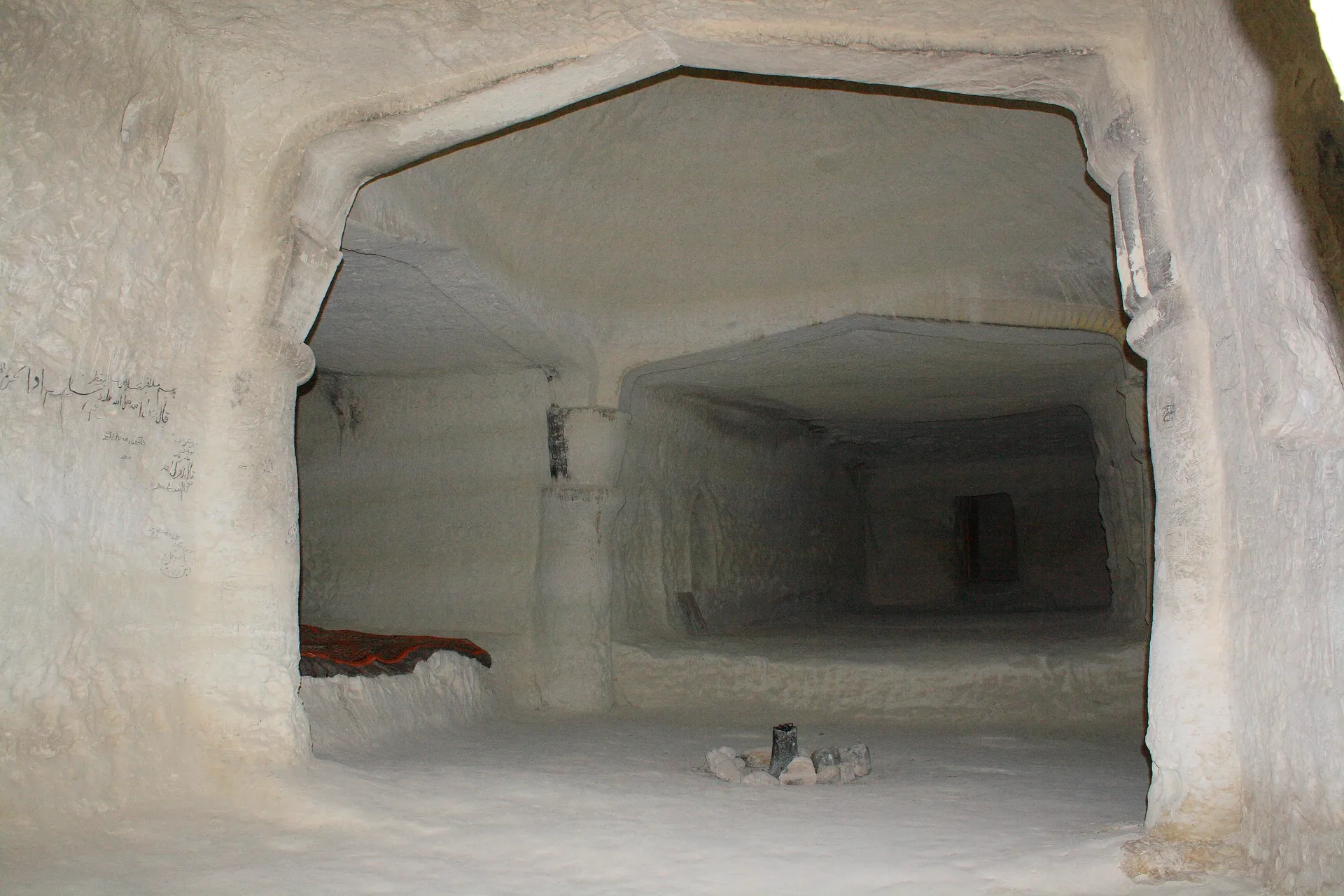
Stepping through the hillside portal reveals a striking cross-shaped central chamber hollowed straight out of soft Cretaceous chalk. Sunlight pours down through a circular ceiling shaft onto four carved semi-columns while quiet side alcoves line the perimeter. Look carefully along the pale stone walls and you will spot centuries of carved history: Arabic, Persian (Farsi), and Turkic traveler inscriptions, stylised steppe horses, and open-palm (hamsa) protective symbols.
Only 4.5 to 5 kilometers away drops Kapamsay Canyon, a sweeping dry limestone gorge whose chalk walls climb up to 70 meters high, dotted with shaded cave overhangs. Together they form the opening cultural and geological chapter of our 3-day, 5-day, and 7-day 4×4 tours en route to Torysh and Sherkala.