Destination guide
Geology, history, and why Airakty feels architectural
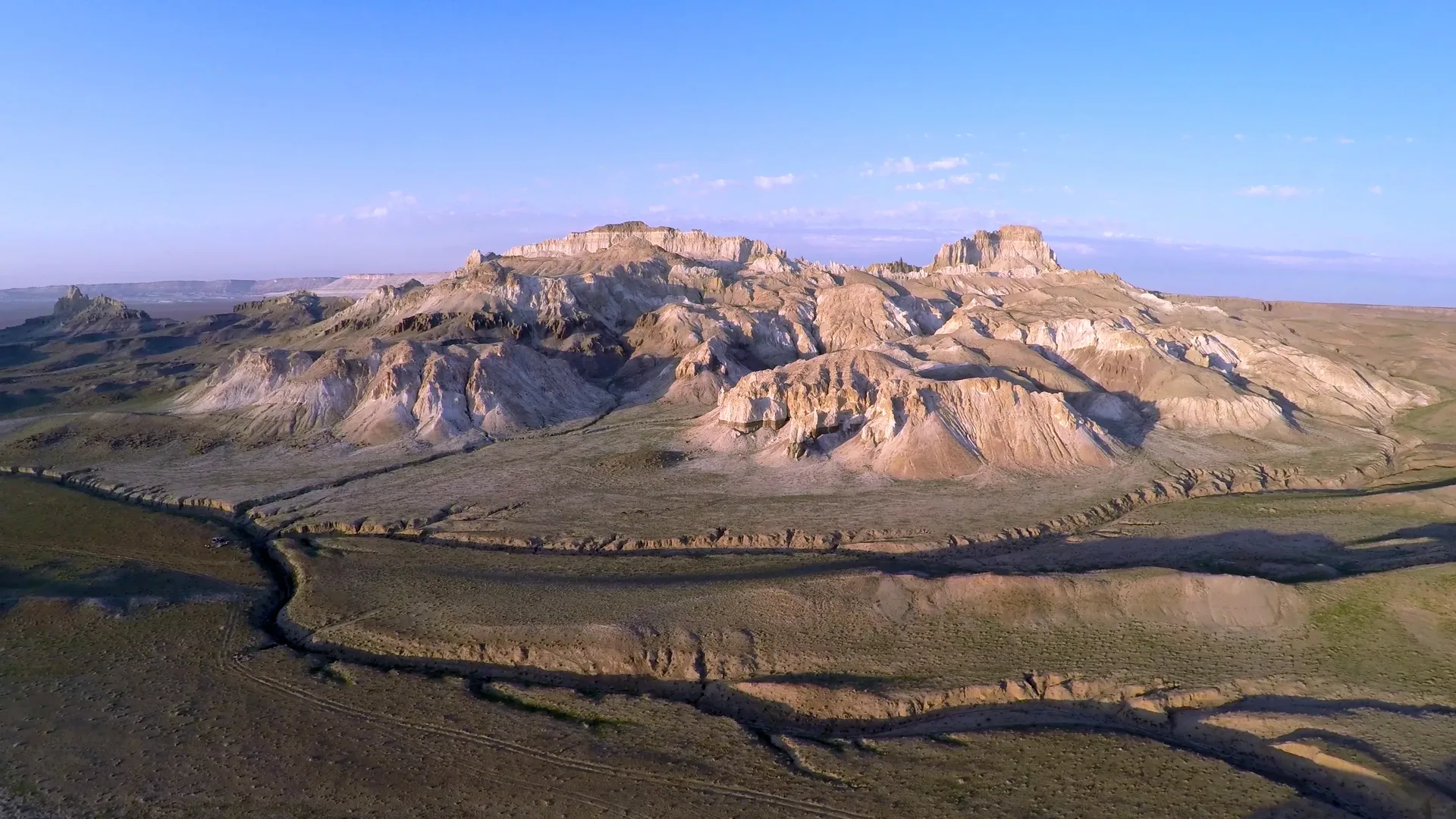
First sketched in 1851 by exiled Ukrainian artist Taras Shevchenko, Airakty-Shomanay rises from the Mangystau plain ~175 km from Aktau as a cluster of sculpted limestone battlements, spires, and eroded mesas.
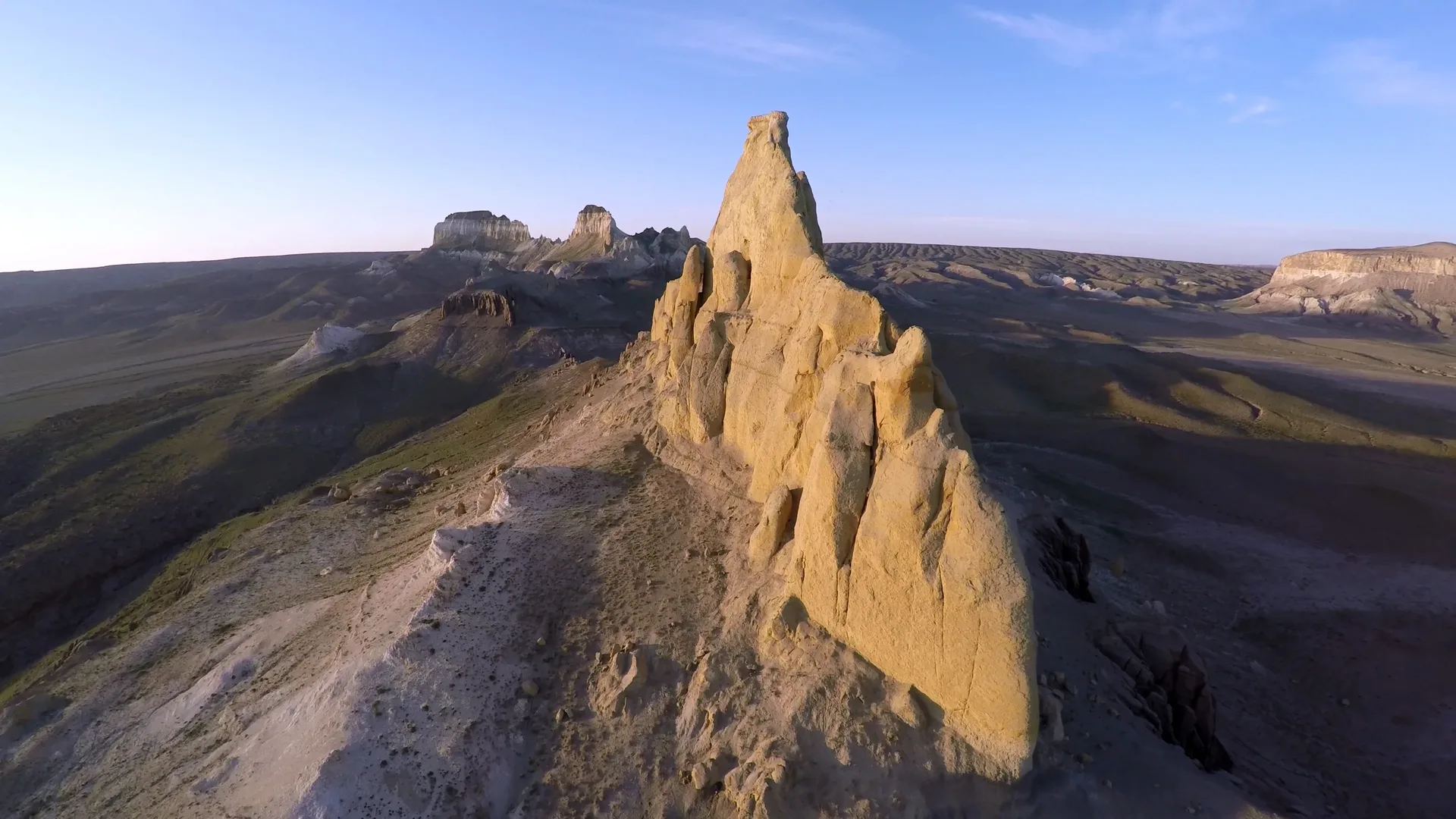
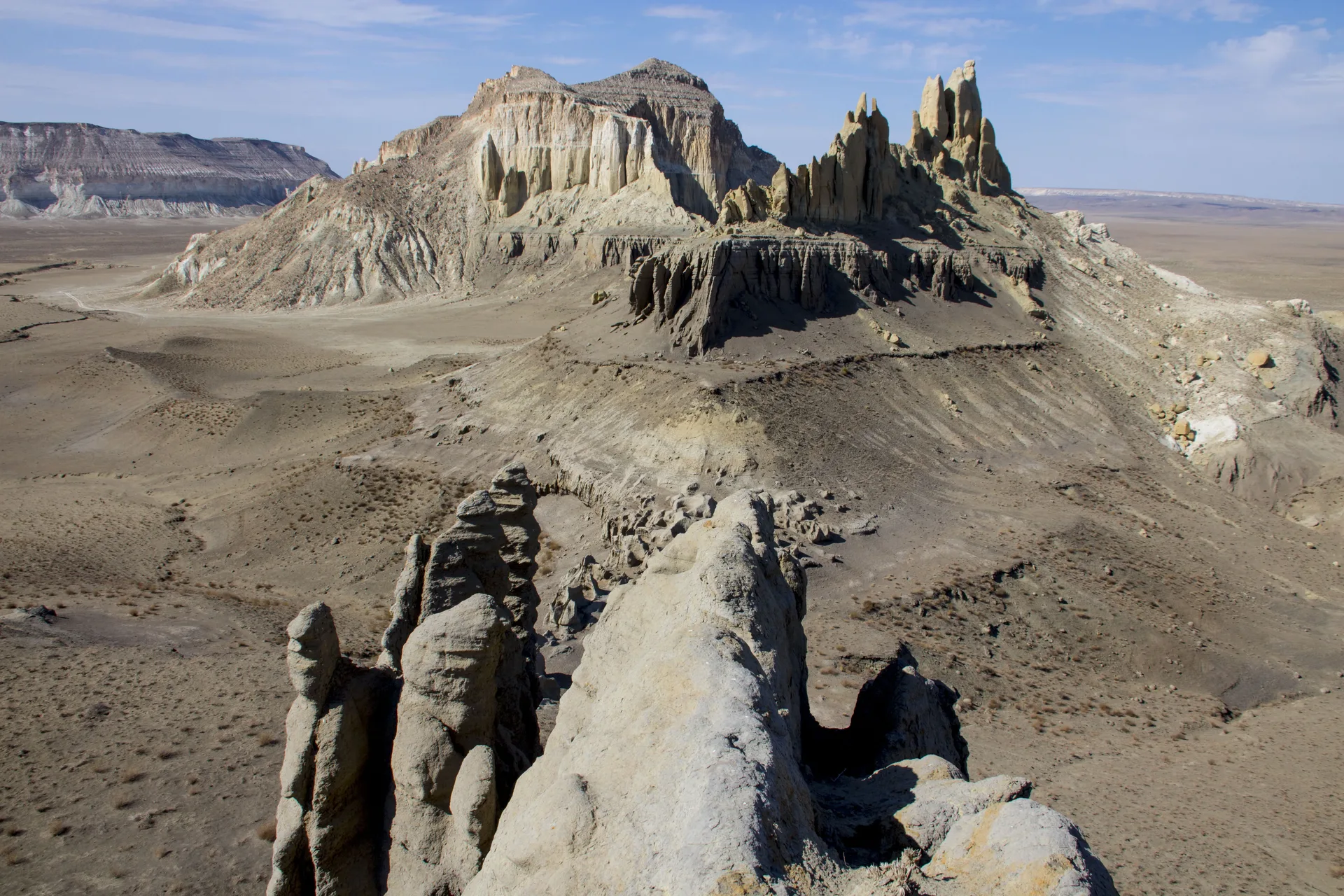
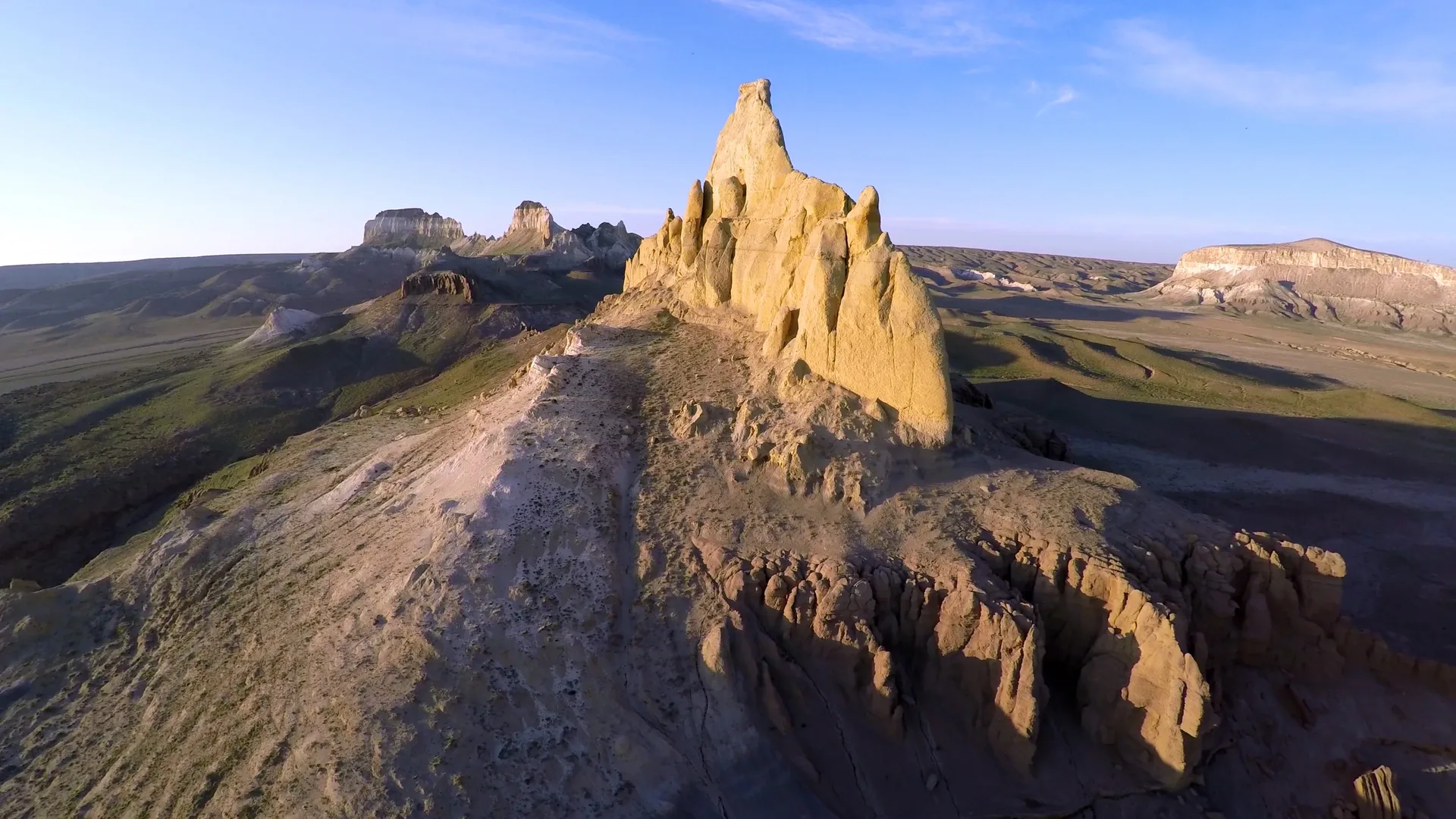
Roughly 10 kilometers east of Sherkala Mountain—and about 170–180 km by road northeast of Aktau (a 2 to 2.5-hour drive via the Shetpe highway)—the flat desert steppe breaks upward into freestanding limestone towers, narrow chimneys, and fortified-looking walls known as Airakty-Shomanay.
Like most of western Mangystau, Airakty’s rock began accumulating around 40 million years ago across the floor of the ancient Tethys Ocean. Compressed Cretaceous chalk, pale marine limestone, silt, and denser clay-ironstone layers were later thrust skyward by tectonic uplift. Over millions of summers of scorching heat, frost fractures, seasonal cloudbursts, and fierce desert wind, softer chalk flanks washed out while tougher upper rock caps protected isolated vertical bastions.
The site earned its famous English nickname in 1851. During his 1850–1857 exile in Mangystau, Ukrainian poet and painter Taras Shevchenko traveled inland across the Karatau range, painted watercolors of the surreal spires, and described the basin in his notes as the “Valley of Castles.” Walk into the western amphitheater at late afternoon today and the likeness is unmistakable: fluted walls read like cathedral organ pipes, buttresses step down like fortress gates, and ravens circle the tallest pinnacles.
Whereas Bozzhyra overwhelms visitors with sheer 200-meter plateau scale, Airakty is intimate enough to explore up close on foot. In Mangystau route order, it pairs naturally after Shakpak-Ata, Torysh Valley of Balls, and Sherkala, serving as our signature Day 1 sunset camp on 3-day, 5-day, and 7-day 4×4 tours.