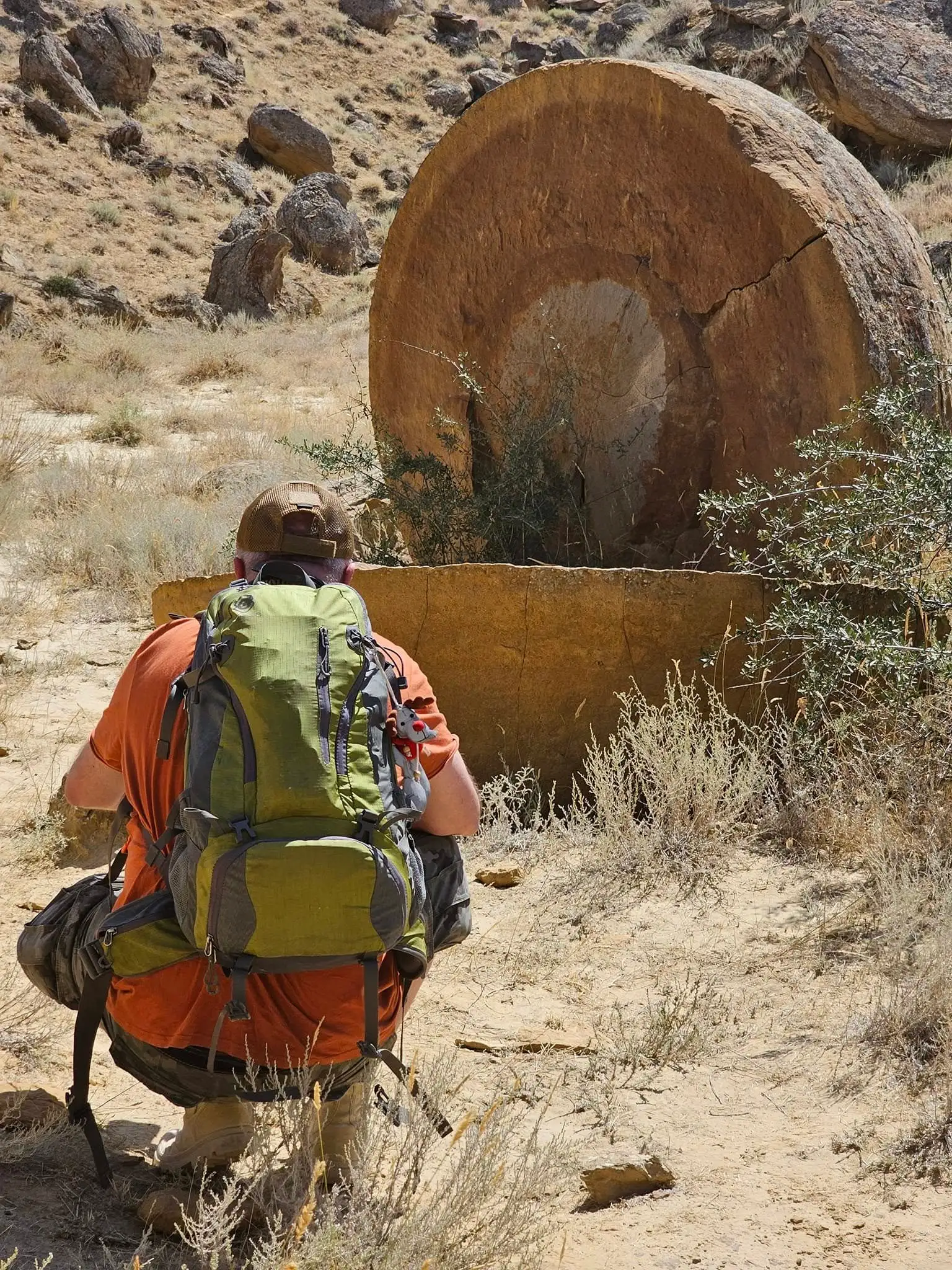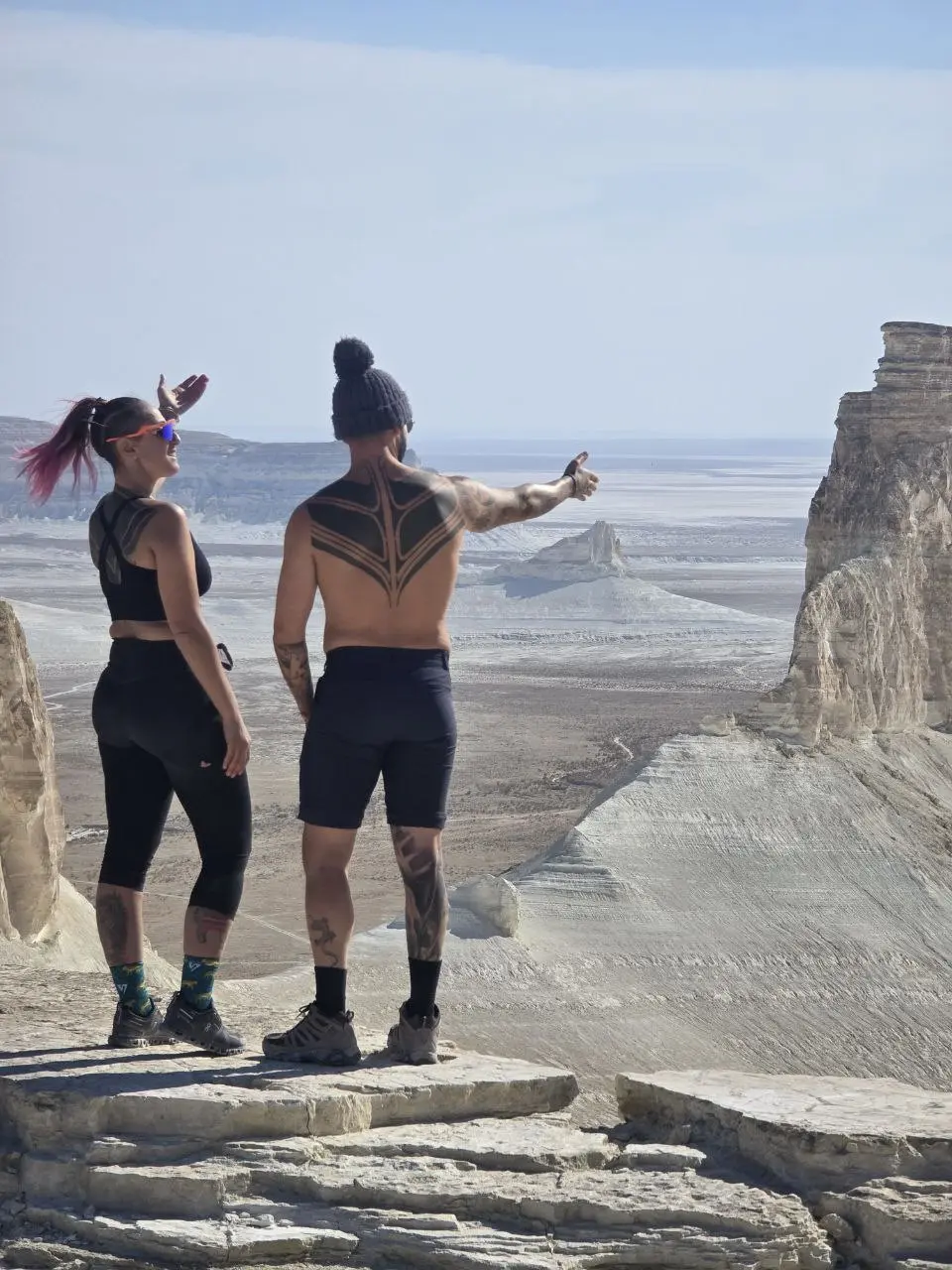
Traveler standing beside large stone spheres in Torysh Valley of Balls Mangystau

Valley of BallsTorysh Stone SpheresMangystau Guide

Natural stone spheres, folklore, and realistic access notes near Shetpe

Torysh, known as the Valley of Balls, is scattered with spherical stone concretions from small stones to boulders large enough to stand beside.

Destination guide

What you see at Torysh

Torysh is one of the strangest places in Mangystau: an open steppe field scattered with spherical stone concretions, from fist-sized stones to boulders about 3-4 meters across. It is better known in English as the Valley of Balls, and it feels different from Bozzhyra or Tuzbair because the experience is on foot, close to the ground.

The science is natural, though still discussed in detail. The prevailing explanation is concretion: minerals cemented around a hard core inside sedimentary rock over millions of years, then erosion exposed the harder spheres. Some researchers also discuss megaspherulites from volcanic ash origin. The honest answer is that the stones are natural, ancient, and still interesting to geologists.

Torysh sits near Shetpe village, roughly 8-9 km away, and close to Sherkala Mountain. The area is often described as around 100 km from Aktau, but the exact route and timing should be confirmed before travel.

Written by Sergey Khachatryan, local Mangystau guide

Sergey has explored Mangystau routes since 2000, first as a hobby and now as a way to share the region with travelers. His route planning focuses on realistic driving times, safe 4x4 access, weather, and the best light for each place.

Sergey’s field note

Sergey recalls:

The road to Torysh is a real Mangystau road, steppe, dust, open space, and then the stone balls start appearing as if someone scattered them by hand. Guests always ask the same thing: "Who put them here?" I tell them nature had more time and patience than people.

There is one big sphere I stop at to show the scale; from far it looks like a toy, but standing next to it people understand it is not a small stone. Some are broken open, and you can see they are not random rocks. They have a shape and a kind of centre, like they grew slowly inside the earth.

Sergey Khachatryan, local Mangystau guide
Sergey Khachatryan, local Mangystau guide.
Person standing beside a large spherical concretion in Torysh Valley of Balls
The size of the spheres is easiest to understand when someone stands beside them.
Cracked onion-like stone sphere weathering in Torysh Valley of Balls
Many stones crack and peel like an onion as the outer layers weather.
Group visiting rocky Torysh landscape during a Mangystau tour
Torysh is often part of a northern route with Sherkala and other stops near Shetpe.

Route experience

How to experience the Valley of Balls

Torysh is not about one panoramic viewpoint. It is about walking quietly between the spheres, noticing texture, scale, and the way the steppe changes around them.

01

Walk between the spheres

The place can feel eerie because the landscape is open and quiet, yet the stones appear almost arranged. Stay aware of footing; the ground is uneven and the larger boulders are not playground equipment.

02

Look for weathered layers

Some spheres crack and peel like an onion. These details photograph better in side light than under harsh noon sun, when shadows disappear.

03

Keep folklore separate from science

A local legend says invading enemies were turned to stone after people prayed for help. It is good storytelling, but it should be labeled as folklore, not geology.

04

Pair it with Sherkala

Torysh and Sherkala work well together because they are close in the same northern route zone. Many travelers add Shakpak-Ata or other stops when timing allows.

Good to know

  • Access tracks are not always clearly signed; do not rely only on a map pin.
  • A 4x4 is recommended, especially after rain or when tracks are rough.
  • Do not climb fragile or cracked spheres for photos.
  • Bring sun protection because there is almost no shade in the open field.
  • The site works well as a day-trip element from Aktau or part of a 3-day route.

Sources and route links

The public Torysh reference summarizes the concretion theory, local folklore, and connection with Sherkala and Kyzylkala. For a stronger route, connect this guide with Sherkala and the tours from Aktau.

Compared with global oddities like New Zealand’s Moeraki Boulders or California’s Bowling Ball Beach, Torysh feels more remote and less developed. That is part of its appeal, but it also means visitors should not expect services.

FAQ

Valley of Balls FAQ

Clear answers for travelers researching Torysh.

Are the Valley of Balls stones natural?

Yes. The accepted explanation is natural concretion, where minerals cement around a core inside sedimentary rock and later erosion exposes the harder spheres.

How big are the spheres?

They range from small stones to large boulders around 3-4 meters across. Many are cracked or weathered into onion-like layers.

How do you get to Torysh?

Torysh is near Shetpe and Sherkala. The access track can be unsigned and rough, so a local 4x4 route is safer than relying only on a map pin.

Can Torysh be a day trip from Aktau?

Yes, it can fit a shorter northern route, especially with Sherkala. For a deeper Mangystau trip, include it in a 3-day or longer itinerary.

Plan Torysh

Add the Valley of Balls to a northern 4x4 route

Use the Mangystau 4x4 tour or tours from Aktau to combine Torysh with Sherkala and nearby stops. Message us for a tailored quote based on dates, group size, and route length.

Message for Quote