Cultural & heritage guide
History, the ~1,300 m Oglandy descent, and living Sufi tradition
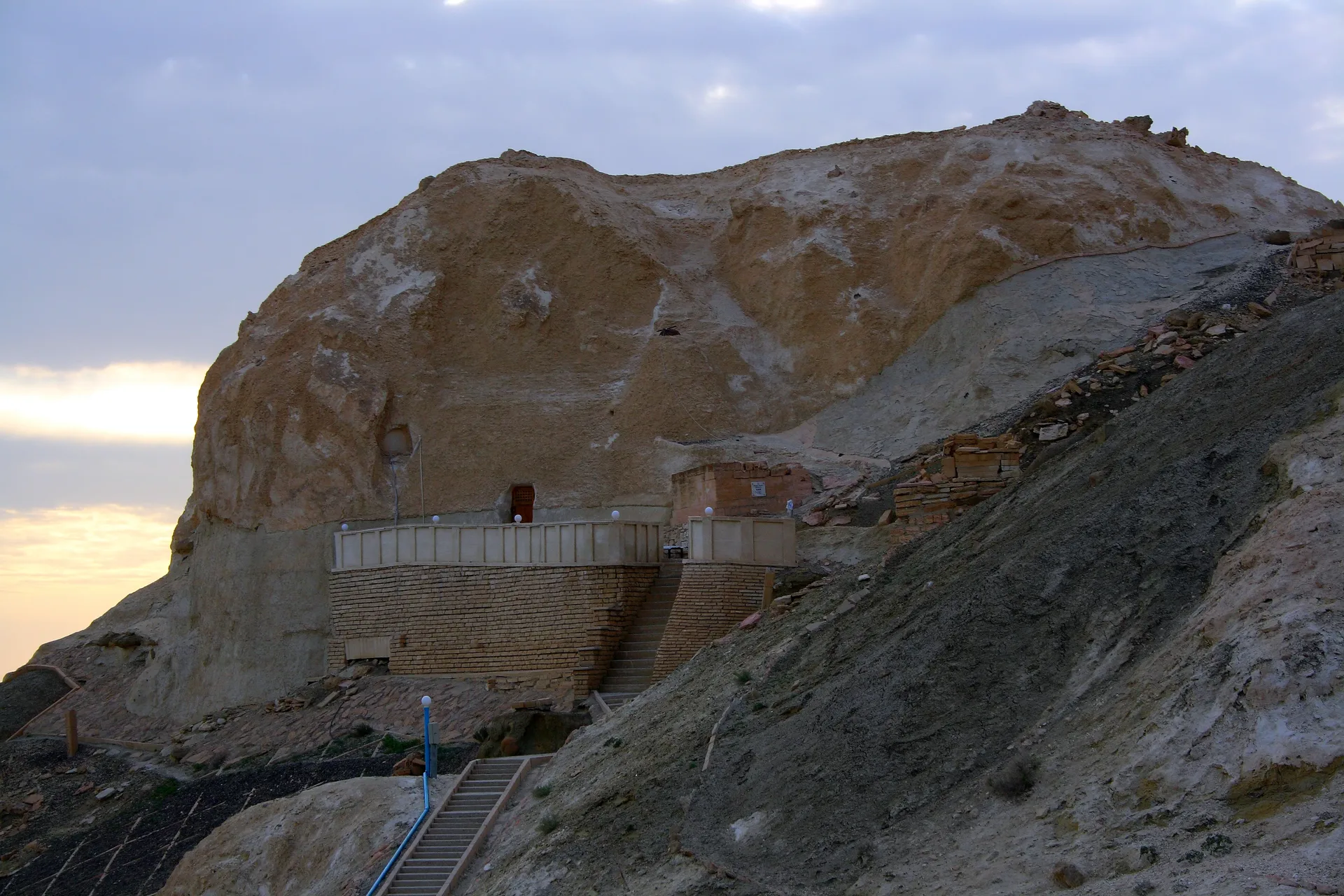
Roughly 230–285 km east of Aktau, Beket Myrzagululy (1750–1813) carved rock chambers into the Ustyurt chalk slope—reached today via a ~1,300 m stepped canyon walk past desert wildlife and living Kazakh hospitality.
High on the southern rim of the Oglandy tract along the edge of the Ustyurt Plateau sits Beket-Ata Underground Mosque—about 230 to 285 km east of Aktau via Zhanaozen depending on the desert track taken. For Kazakhs across western Kazakhstan, Oglandy holds deep spiritual reverence comparable to major Sufi shrines in Central Asia.
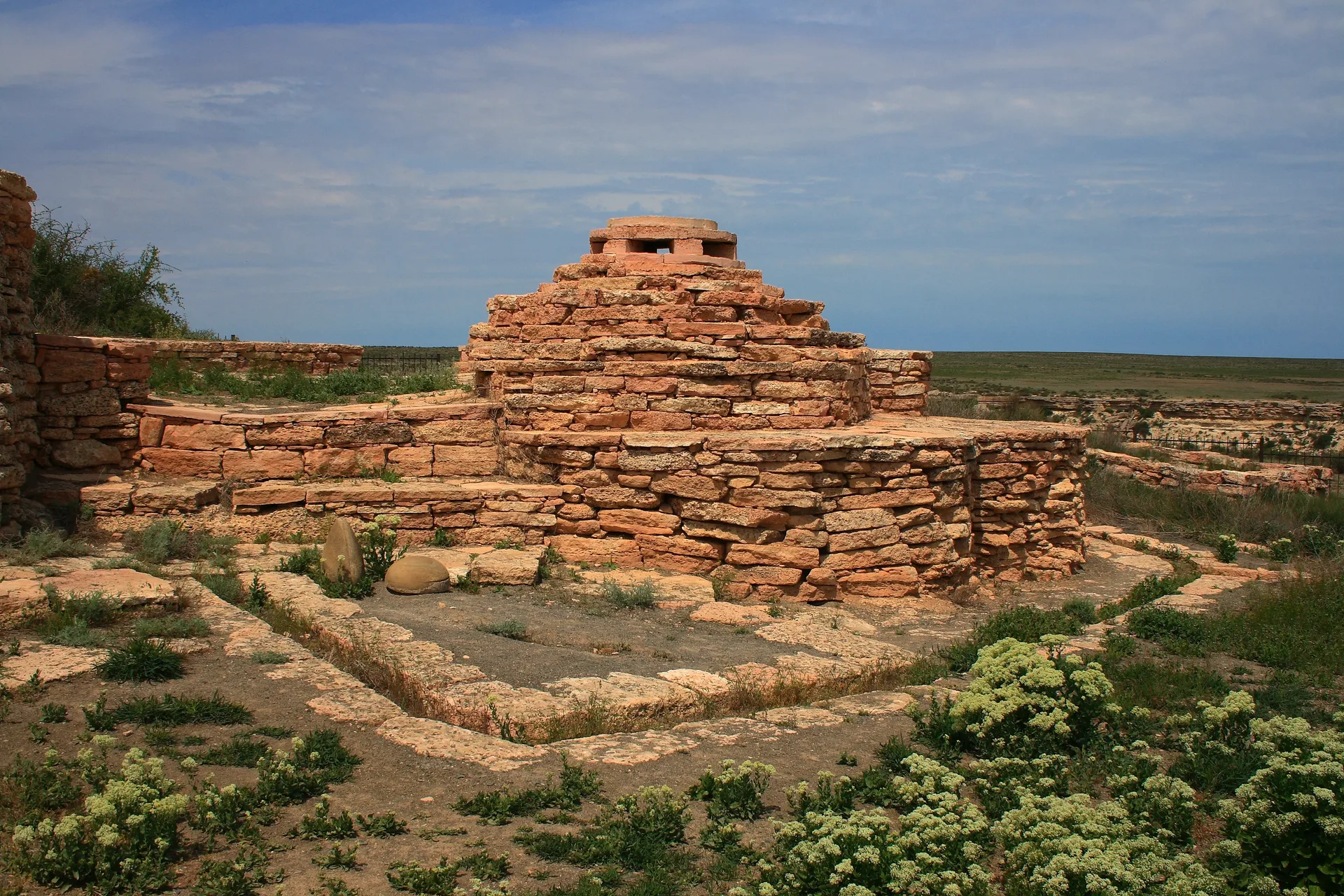
The site honors Beket Myrzagululy (1750–1813), a renowned 18th-century Sufi thinker, astronomer, peacemaker, and teacher who excavated several subterranean mosques in western Kazakhstan before settling and being laid to rest inside Oglandy’s pale chalk cliffs. Nearby sits an historic steppe necropolis adorned with traditional carved limestone headstones (kulpytas) and domed stone mausoleums.
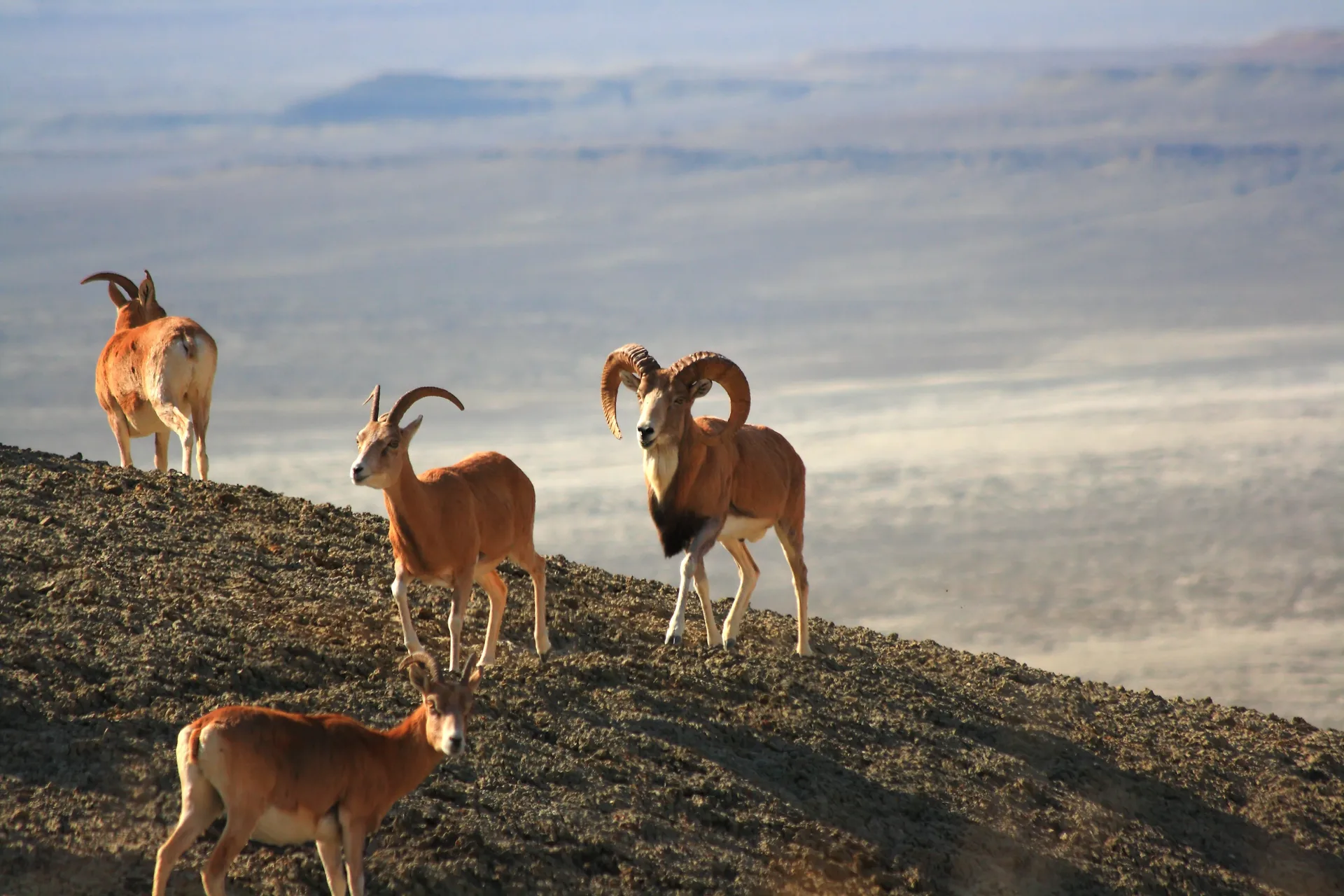
Unlike uninhabited archaeological ruins such as Shakpak-Ata, Beket-Ata is alive every day: Kazakh families walk down the gorge, share tea and flatbread at the upper pilgrimage complex, and often pass wild Ustyurt mouflon (desert mountain sheep) grazing calmly along protected neighboring bluffs.
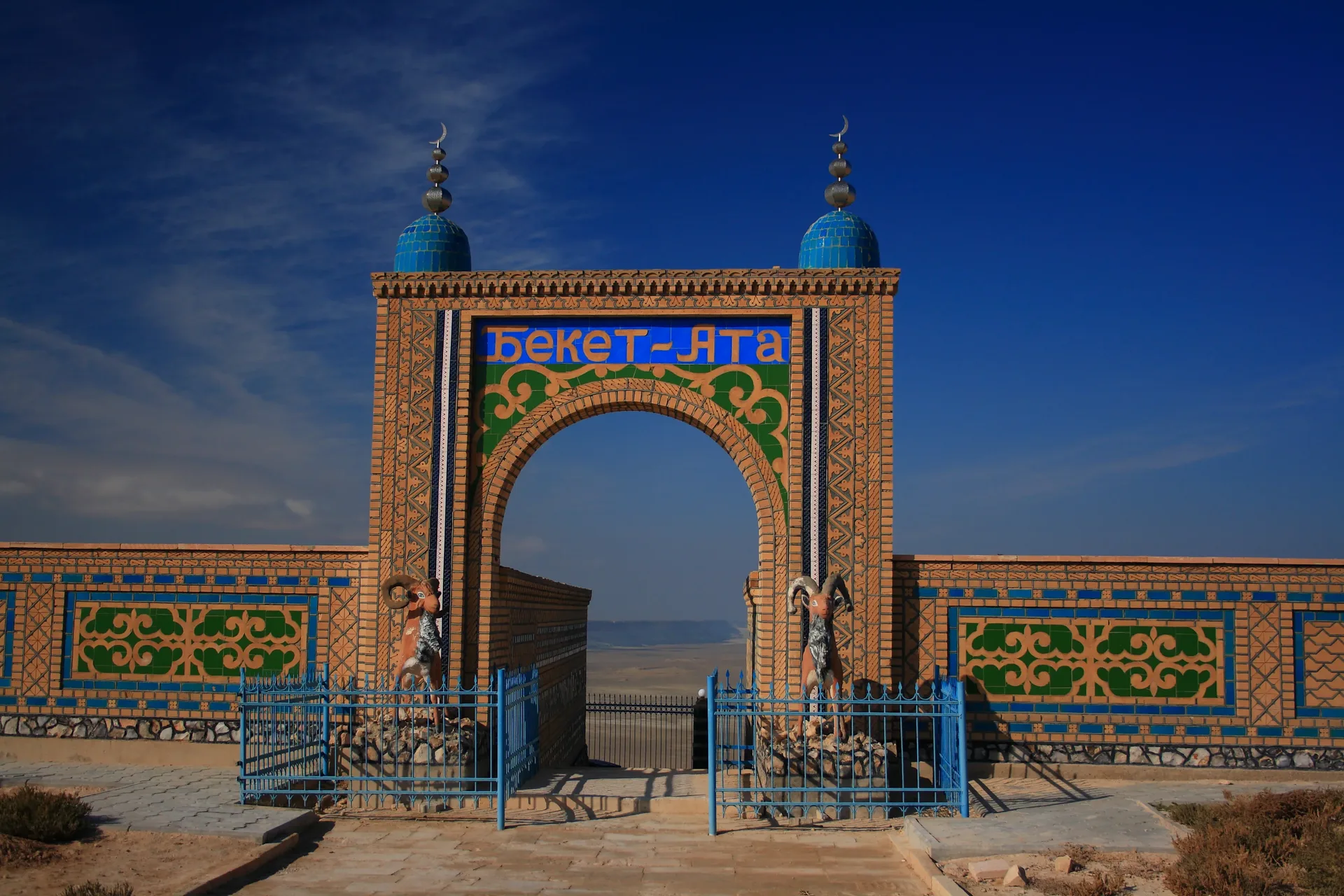
All vehicles stop on the upper plateau rim near the blue-tiled entrance arch. From there, every visitor descends roughly 1,300 meters down stepped canyon pathways cut into the white Ustyurt chink—and climbs back up the same trail afterward—pairing smoothly with nearby Bozzhyra on private 4×4 tours or custom VIP itineraries.